Colon Cancer / How To Stop Colon Cancer In Its Tracks University Hospitals / Regular screening tests for cancer of the colon or rectum, especially with a colonoscopy, is recommended as part of a health plan for those over.
Colon Cancer / How To Stop Colon Cancer In Its Tracks University Hospitals / Regular screening tests for cancer of the colon or rectum, especially with a colonoscopy, is recommended as part of a health plan for those over.. The data visualizations tool provides detailed statistics. Colorectal cancer is a cancer that starts in the colon (large intestine) or rectum. Patients with colon cancer or rectal cancer may experience one or multiple symptoms. In this article, learn about the signs and symptoms, stages, and treatments, including surgery. It will typically be either:
Pappou, a colorectal surgeon at memorial sloan kettering cancer center in new york. Colon cancer is currently the fourth most common cancer diagnosed in the united states. Colorectal cancer whether you or a loved one are worried about getting colorectal cancer, have just been diagnosed, are going through colorectal cancer treatment, or are trying to stay well after treatment, this detailed information can help you find the answers you need. Colorectal (large bowel) cancer is a disease in which malignant (cancer) cells form in the inner lining of the colon or rectum. Signs and symptoms may include blood in the stool, a change in bowel movements, weight loss, and fatigue.

Colorectal cancer starts in the colon or the rectum.
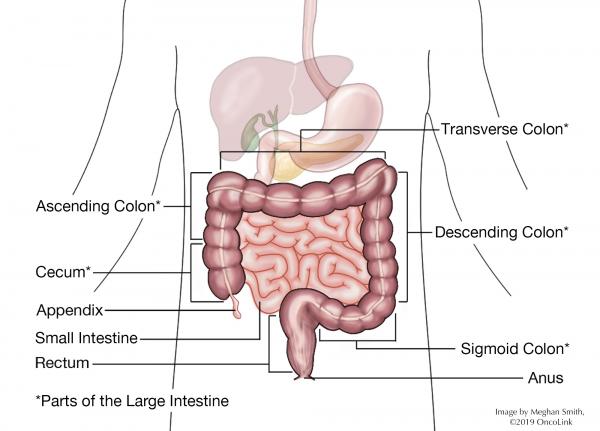
Colorectal cancer is a malignant tumor arising from the inner wall of the large intestine (colon) or rectum. Stage 1 tumors are often removed at the time of colonoscopy, while surgery is the main recommended therapy for stage 2 and 3 colorectal tumors. There are over 101,000 new cases of colon cancer every year in the u.s. Early detection through screening can prevent cancer and keep it at a treatable stage. Colon cancer and rectal cancer are often grouped together because they have many features in common. Colorectal cancer is the third leading cause of cancer in both men and women in the u.s. Experts point to more colon cancer screening as the main reason. It extends from the end of the small bowel to the rectum; It usually begins as small, noncancerous (benign) clumps of cells called polyps that form on the inside of the colon. Discover the md anderson difference here. Explore the links on this page to learn more about colorectal cancer prevention, screening, treatment, statistics, research, clinical trials, and more. Colon cancer is highly treatable if diagnosed early. Patients with colon cancer or rectal cancer may experience one or multiple symptoms.
In this article, learn about the signs and symptoms, stages, and treatments, including surgery. Colon cancer is currently the fourth most common cancer diagnosed in the united states. Finding and removing polyps can prevent colorectal cancer. The digestive system removes and processes nutrients (vitamins, minerals, carbohydrates, fats, proteins, and water) from foods and helps pass waste material out of the body. The symptoms of colorectal cancer may not develop until the disease has progressed into stage ii or beyond.
Colorectal cancer articles the best way to beat colon cancer colon cancer is the second most common cause of cancer deaths, but the death rate has steadily dropped over the past several decades among older adults.
Cancer starts when cells in the body start to grow out of control. Colon cancer and rectal cancer are often grouped together because they have many features in common. Predicting when or if colon cancer will develop is not possible, but predicting due to high risk factors can save lives. According to the american cancer society, about 135,430 people were diagnosed with colon cancer in 2014. The digestive system removes and processes nutrients (vitamins, minerals, carbohydrates, fats, proteins, and water) from foods and helps pass waste material out of the body. The data visualizations tool provides detailed statistics. For both men and women. Patients with colon cancer or rectal cancer may experience one or multiple symptoms. In the u.s., 20% of people who find out they have colon cancer learn that it has spread to distant parts of their body. Colon cancer is a type of cancer that begins in the cells lining the large intestine (colon); Explore the links on this page to learn more about colorectal cancer prevention, screening, treatment, statistics, research, clinical trials, and more. Pappou, a colorectal surgeon at memorial sloan kettering cancer center in new york. Colon cancer symptoms include a change in bowel habits or.
It extends from the end of the small bowel to the rectum; Explore the links on this page to learn more about colorectal cancer prevention, screening, treatment, statistics, research, clinical trials, and more. Colon and rectal cancers do not usually produce symptoms in the early stages of disease. Cancer can also spread locally through the lymph nodes and bloodstream. It often begins as small, noncancerous polyps in the large intestine (colon) that can, over time, become cancerous.
Colon cancer is highly treatable if diagnosed early.
It will typically be either: Predicting when or if colon cancer will develop is not possible, but predicting due to high risk factors can save lives. It often begins as small, noncancerous polyps in the large intestine (colon) that can, over time, become cancerous. Finding and removing polyps can prevent colorectal cancer. The symptoms of colorectal cancer may not develop until the disease has progressed into stage ii or beyond. Colon cancer symptoms include a change in bowel habits or. Colorectal (large bowel) cancer is a disease in which malignant (cancer) cells form in the inner lining of the colon or rectum. Colon and rectal cancers do not usually produce symptoms in the early stages of disease. Colorectal cancer whether you or a loved one are worried about getting colorectal cancer, have just been diagnosed, are going through colorectal cancer treatment, or are trying to stay well after treatment, this detailed information can help you find the answers you need. Explore the links on this page to learn more about colorectal cancer prevention, screening, treatment, statistics, research, clinical trials, and more. The data visualizations tool provides detailed statistics. Discover the md anderson difference here. These cancers can also be called colon cancer or rectal cancer, depending on where they start.


Komentar
Posting Komentar